
Urgent Care vs Hospital: Where Should You Go?


A painful fall at work, a fever that will not break, or a deep cut can make one question feel urgent: urgent care vs hospital - where should you go? The right answer depends on the severity of the problem, how quickly symptoms are changing, and whether you may need emergency testing or treatment. Choosing the appropriate setting can help you get care faster while avoiding unnecessary cost, long waits, and confusion.
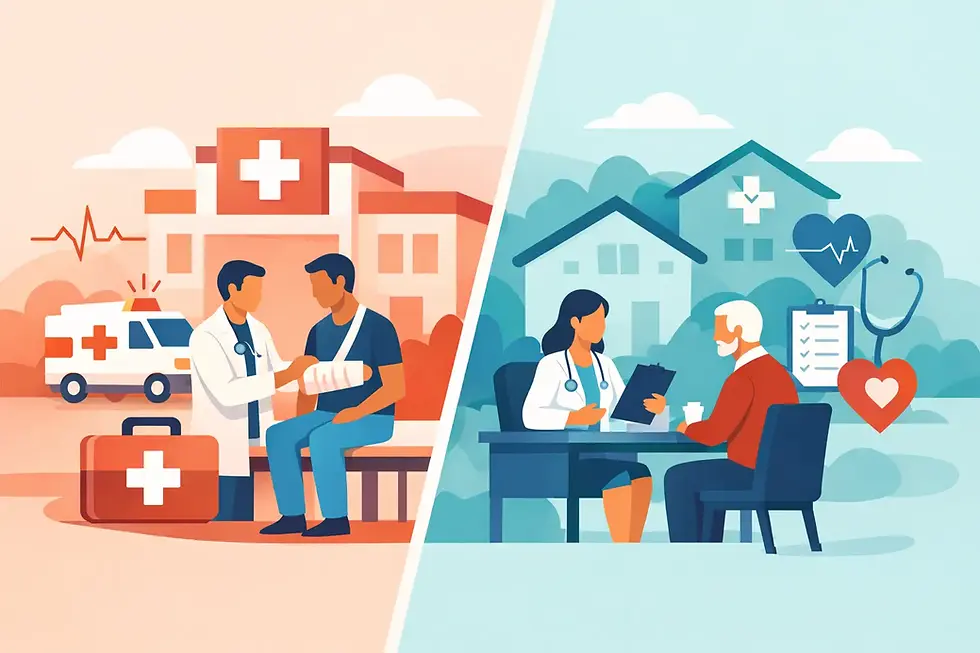
For many non-life-threatening illnesses and injuries, an urgent care clinic offers prompt, practical treatment close to home. A hospital emergency department is the right choice when there is a possible threat to life, limb, or long-term function. Knowing the difference gives you a better starting point when every minute feels important.
Urgent Care vs Hospital: The Core Difference
Urgent care treats medical concerns that need attention soon but are not emergencies. These clinics are designed for walk-in access and commonly manage minor injuries, sudden illnesses, infections, work-related injuries, and pain that cannot wait for a routine primary care appointment.
A hospital emergency department has the staff, equipment, and resources to manage serious or unstable conditions around the clock. Emergency departments can provide advanced imaging, emergency surgery, trauma care, blood products, intensive monitoring, and hospital admission when needed.
The difference is not simply how much pain you are in. A sprained ankle can be very painful and still be appropriate for urgent care. Chest pressure, weakness on one side of the body, or trouble breathing may not always feel dramatic at first, but they require emergency evaluation.
Urgent care can be an efficient first stop when you are stable, alert, and able to travel safely. Hospitals are built for situations where a delay could create serious harm.
When Urgent Care Is Often the Right Choice
Urgent care is well suited for conditions that need same-day assessment but do not require emergency-level intervention. A clinic can evaluate symptoms, perform a physical exam, order or provide appropriate diagnostic services based on its capabilities, prescribe medication when indicated, and explain the next steps for recovery.
Common reasons to visit urgent care include cold, flu, or allergy symptoms; sore throat; ear pain; urinary symptoms; nausea or mild dehydration; rashes; pink eye; and uncomplicated skin infections. It is also often a practical choice for cuts that may need cleaning or stitches, minor burns, insect bites, and mild to moderate asthma symptoms when the person is not in significant distress.
For Orange County workers and families, injuries are another major reason to choose urgent care. A clinic can often assess sprains, strains, bruises, back pain, joint pain, minor fractures, and sports injuries. This is particularly helpful after a workplace injury or auto accident when you need timely medical documentation, a treatment plan, and clear work-status guidance.
Musculoskeletal care should not stop with the first visit. If an injury involves persistent pain, reduced motion, numbness, weakness, or concern for a tendon, joint, or hand injury, coordinated follow-up matters. A setting that can connect urgent evaluation with orthopedics, hand-focused care, physical therapy, pain management, or occupational medicine can make the recovery process less fragmented.
Urgent care is also a useful option when you need services that are practical rather than emergency-based, such as pre-operative clearance, drug testing, DOT exams, workers' compensation support, or employer-authorized care. These needs are time-sensitive, but they do not belong in an emergency department.
When to Go to a Hospital Emergency Department

Call 911 or go to the nearest emergency department for symptoms that could signal a heart attack, stroke, severe allergic reaction, major injury, or another medical emergency. Do not drive yourself if you are having severe symptoms or could lose consciousness.
Emergency warning signs include chest pain, pressure, or tightness, especially with sweating, nausea, shortness of breath, or pain spreading to the arm, jaw, back, or shoulder. Sudden facial drooping, one-sided weakness or numbness, confusion, new trouble speaking, loss of balance, or a severe sudden headache may be signs of stroke.
Go to the emergency department for serious difficulty breathing, blue or gray lips, fainting, seizures, uncontrolled bleeding, coughing or vomiting blood, or a severe allergic reaction with swelling of the face, lips, tongue, or throat. Severe abdominal pain, sudden vision loss, a major head injury, or a deep wound with uncontrolled bleeding also need emergency care.
A suspected broken bone with a visible deformity, bone through the skin, loss of pulse or sensation below the injury, or a limb that appears cold or pale should be treated as an emergency. The same is true for severe burns, significant electrical injuries, or trauma after a serious car crash or fall.
For children, older adults, pregnant patients, and people with significant heart, lung, immune, or chronic medical conditions, the threshold for emergency care may be lower. When symptoms are severe, unusual, rapidly worsening, or simply do not feel right, choose the safer option and seek emergency help.
Why a Hospital Is Not Always Faster or Better for Minor Problems
Emergency departments prioritize patients by medical urgency, not arrival time. This process, often called triage, means a person with a sore throat, ankle pain, or a minor cut may wait while teams care for patients with strokes, severe injuries, or breathing emergencies.
That is appropriate for emergency medicine, but it can be frustrating when you need straightforward treatment. For a stable, non-emergency issue, urgent care can often provide a more direct path to evaluation. It may also be a more cost-conscious option, depending on your insurance plan and the services required.
There are trade-offs. Urgent care centers do not all offer the same testing, imaging, procedures, or hours. A clinic may determine that your condition needs a higher level of care and refer you to the emergency department. That referral is not a failure. It is a clinical decision made to ensure you receive the resources your condition requires.
How to Make the Decision When You Are Unsure
Start with stability. Are you having trouble breathing, chest pain, severe bleeding, confusion, fainting, sudden weakness, or severe pain that came on quickly? If yes, call 911 or go to the emergency department.
If you are stable, consider the type of problem. A minor injury, infection, illness, rash, or pain problem that needs same-day attention is often appropriate for urgent care. If you think you may need surgery, intensive monitoring, advanced emergency imaging, or immediate specialist intervention, the hospital is more appropriate.
Also consider whether the issue can be addressed in one connected care plan. A work injury may require an initial evaluation, documentation for an employer or insurance carrier, treatment for pain, and rehabilitation. A center that handles these services under one roof can reduce delays between diagnosis, work restrictions, and follow-up care.
At A&C Medical Center, patients can seek walk-in and appointment-based care for many urgent, orthopedic, occupational, and rehabilitation needs. The goal is simple: provide fast, compassionate evaluation and a clear next step, whether that means treatment in the clinic, specialty follow-up, telemedicine support, or referral for emergency care.
After Your Visit: Pay Attention to Changes
Whether you choose urgent care or a hospital, follow the discharge instructions and take prescribed medications as directed. Ask when you can return to work, exercise, drive, or resume normal activities, especially after an injury. If symptoms worsen, new symptoms appear, or you are not improving as expected, contact a healthcare professional promptly.
For an injury, do not ignore lingering numbness, weakness, swelling, reduced movement, or pain that keeps you from using the affected area normally. Early follow-up can help identify problems that are not obvious on the first day and may protect function during recovery.
When you are deciding between urgent care and a hospital, trust the warning signs and do not delay emergency treatment. For stable problems that need care now, a walk-in clinic can offer the timely, coordinated support that helps you move forward with confidence.

Comments