
Orthopedic Clinic for Joint Pain: When to Go


That knee pain that started after a long workday, the shoulder that keeps catching when you reach overhead, the ankle that never felt quite right after a twist - joint pain has a way of interfering with normal life faster than people expect. Choosing an orthopedic clinic for joint pain can help you move from guessing and waiting to getting a clear diagnosis, targeted treatment, and a plan that fits your schedule.
Joint pain is common, but the cause is not always obvious. Some people are dealing with arthritis that has built up over time. Others have a sports injury, a work-related strain, tendon inflammation, cartilage wear, or pain that started after a car accident. The right clinic does more than confirm that something hurts. It helps identify why it hurts, how serious it is, and what needs to happen next.
Why choose an orthopedic clinic for joint pain
A general medical visit can be a good first step for many concerns, but joint pain often benefits from more focused musculoskeletal care. Orthopedic providers evaluate how bones, joints, muscles, ligaments, and tendons work together. That matters because pain in one area may actually start somewhere else. A painful knee, for example, can be affected by hip weakness, alignment issues, or an old injury that changed the way you walk.
An orthopedic clinic is also useful when pain is limiting work, exercise, sleep, or daily movement. If you cannot lift comfortably, bend normally, grip without pain, or walk without favoring one side, it usually makes sense to seek specialty care instead of waiting for it to pass. Early treatment can reduce the risk of a minor issue becoming a longer, more complicated recovery.
For many patients, convenience matters almost as much as expertise. When evaluation, imaging coordination, follow-up care, rehabilitation, and pain-focused treatment are easier to access, patients are more likely to stick with care. That can make a real difference in outcomes.
Signs your joint pain needs medical attention
Not every ache requires an urgent visit, but some symptoms should not be ignored. Pain that lasts more than a few days, keeps coming back, or gets worse with normal activity deserves attention. Swelling, stiffness, clicking, locking, instability, numbness, and reduced range of motion can all point to a structural or inflammatory problem.
Pain after an injury should be taken seriously, especially if you heard a pop, cannot bear weight, or notice visible swelling or bruising. The same is true if a joint feels weak, gives out, or seems stuck in place. These symptoms do not always mean surgery is needed, but they do suggest the problem should be examined by a provider with orthopedic experience.
There is also the issue of timing. Waiting may seem reasonable if life is busy, but delayed care can turn a treatable condition into a more stubborn one. Repetitive stress injuries, tendon problems, and joint inflammation often respond better when addressed early.
What an orthopedic evaluation usually includes

At the first visit, the focus is usually on narrowing down the source of pain. That starts with your history. A provider will ask when the pain began, whether it followed an injury, what movements make it worse, and whether the symptoms affect work, driving, exercise, or sleep. Seemingly small details matter. Pain going up stairs is different from pain while sitting still. Morning stiffness suggests something different than sharp pain with twisting.
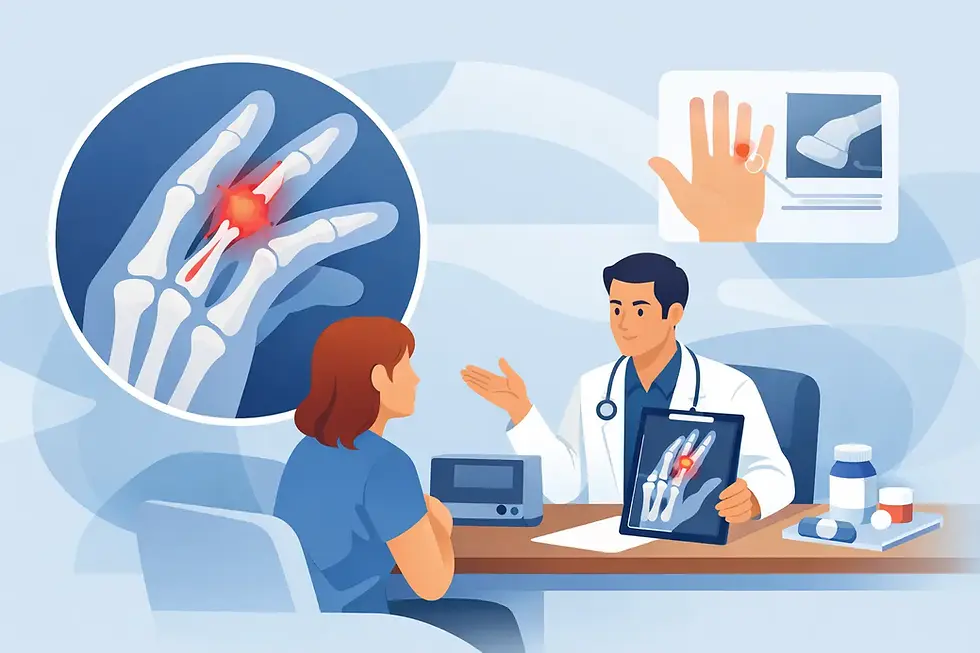
The physical exam looks at motion, strength, joint stability, tenderness, and alignment. In some cases, the provider may compare both sides of the body to spot subtle weakness or instability. If needed, imaging may be recommended to evaluate bone, joint space, or soft tissue concerns. The goal is not to order everything at once. It is to choose the next step that makes the diagnosis clearer.
For patients with work injuries or personal injury cases, documentation and care coordination are also important parts of the process. Clear records, treatment plans, and follow-up recommendations can help patients move through both medical and administrative requirements with less frustration.
Common conditions treated at an orthopedic clinic for joint pain
Joint pain can come from many sources, and treatment depends on the cause. Arthritis is one of the most common reasons people seek orthopedic care, especially in the knees, hips, shoulders, and hands. Arthritis pain can build gradually, causing stiffness, swelling, and reduced movement over time.
Sprains and strains are another frequent issue. These injuries may seem simple, but some involve ligament damage or persistent instability that should be evaluated. Tendonitis and bursitis are also common, especially in people whose jobs or activities involve repetitive reaching, lifting, kneeling, or gripping.
Cartilage injuries, meniscus tears, rotator cuff problems, and post-traumatic joint pain can also lead patients to orthopedic care. In some cases, the pain is related to overuse. In others, it starts with one sudden event. Both deserve a plan that addresses pain relief and function, not just short-term masking of symptoms.
Treatment is not one-size-fits-all

One of the biggest misconceptions about orthopedic care is that it always leads to surgery. In reality, many joint problems improve with conservative treatment. That may include activity modification, bracing, anti-inflammatory treatment, guided rehabilitation, injections, or a structured physical therapy program. The best treatment depends on your symptoms, exam findings, daily demands, and how long the problem has been going on.
This is where a coordinated outpatient setting can be especially helpful. If a patient needs orthopedic evaluation and physical therapy, having those services aligned can save time and reduce mixed messages. If pain management support or complementary care is appropriate, that can also be considered as part of a broader recovery plan.
There are trade-offs, and honest care should acknowledge them. Rest alone may reduce symptoms, but too much inactivity can lead to stiffness and weakness. Injections may offer relief, but they are not the answer for every diagnosis. Physical therapy can be highly effective, but results depend on consistency. Surgery may be the right choice in some cases, especially with significant tears, joint damage, or failure of conservative care, but it is not the starting point for everyone.
Why coordinated care matters for busy patients
Adults managing work, family responsibilities, and transportation rarely have time to piece care together across multiple offices. That is one reason a multi-specialty clinic model works well for many people with joint pain. When urgent evaluation, orthopedic follow-up, rehabilitation, and supportive services are available under one roof, treatment tends to feel more manageable.
This is especially relevant for injured workers and people dealing with accident-related pain. They often need timely evaluations, work status documentation, referral guidance, and ongoing therapy. Delays between appointments can slow recovery and add stress. A clinic built around coordinated access can reduce that friction.
For Orange County patients, speed matters too. A painful shoulder or swollen knee does not always require a hospital visit, but it should not be left hanging for weeks. A practical outpatient option can help patients get answers sooner and start care before the problem grows.
How to get the most from your visit
It helps to come prepared. Think about when the pain started, what makes it better or worse, and whether there was a specific injury. Bring any prior imaging reports if you have them, and be ready to explain how the pain affects your work or daily routine. If the issue is job-related or tied to an accident, mention that right away so the care team can document it properly.
Patients sometimes minimize symptoms because they do not want to seem dramatic. It is better to be specific. If you cannot kneel, sleep on one side, carry groceries, or type without pain, say so. Functional details help shape the treatment plan.
At A&C Medical Center, this kind of practical, coordinated approach matters because patients are often looking for more than a quick opinion. They want fast care, a clear next step, and support that fits real life.
Joint pain does not need to be severe to deserve attention. If a joint keeps reminding you that something is wrong, it is worth listening. The sooner you get the right evaluation, the sooner you can start moving with more confidence and less pain.


Comments