
DOT Physical Exam Near Me for Busy Drivers


A search for a DOT physical exam near me usually means the clock is already ticking. Your medical certificate may be expiring, a new employer may need clearance, or you may be ready to get back on the road after an injury or health change. For commercial drivers in Orange County, the right visit should be efficient, thorough, and clear about what comes next.
A Department of Transportation physical is more than a routine checkup. It is a federal medical certification exam designed to determine whether a driver can safely perform the demands of commercial driving. Choosing a qualified clinic and arriving prepared can prevent avoidable delays in your certification.
When You Need a DOT Physical Exam Near Me
Most drivers who operate commercial motor vehicles in interstate commerce must maintain a valid DOT medical certificate. The exam must be completed by a medical examiner who is certified through the Federal Motor Carrier Safety Administration National Registry. This requirement matters: a general medical visit does not automatically meet DOT certification standards.
Many drivers schedule an exam when their current certificate is close to expiring. Others need one for a new driving position, a return-to-duty process, employer onboarding, or a change in their medical condition. If you have had surgery, started a new medication, experienced a cardiac issue, or are managing conditions such as diabetes, high blood pressure, or sleep apnea, it is especially wise to schedule before the last minute.
A certificate can be issued for up to 24 months, but the length depends on your health history and the examiner's findings. Some drivers receive a shorter certification period so a condition can be monitored. A shorter certificate is not necessarily a disqualification. It often means you need timely follow-up and documentation to remain medically qualified.
What to Bring to Your DOT Exam
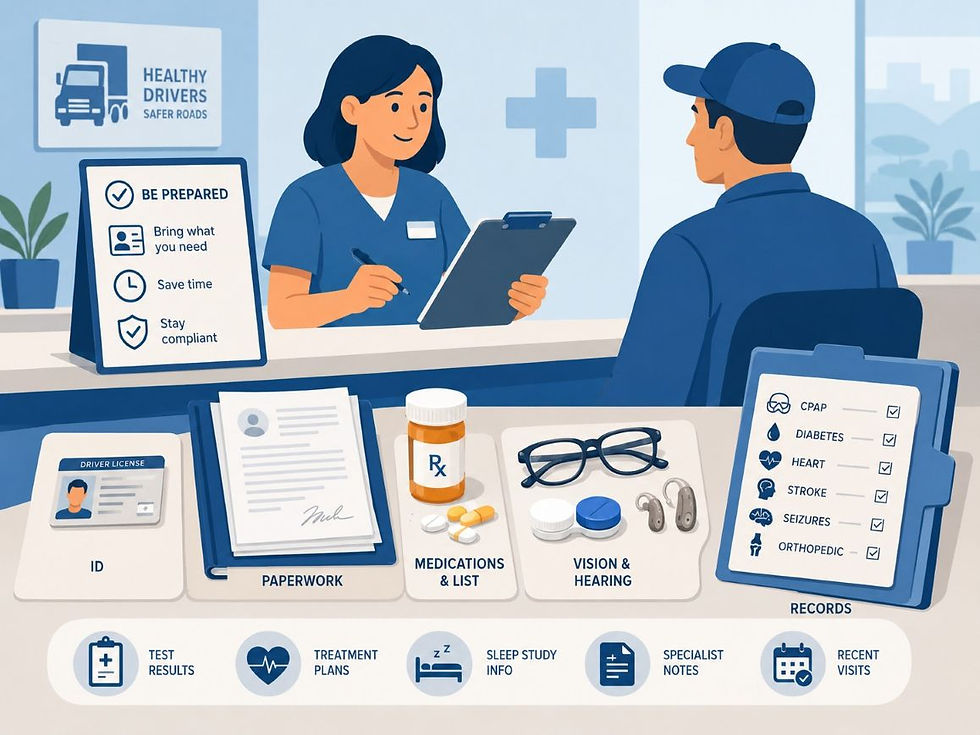
The fastest appointments begin before you walk through the door. Bring a government-issued photo ID and any paperwork your employer has requested. If your company uses an authorization process, confirm whether you need a form or claim number before your visit.
You should also bring your current medical certificate, if you have one, along with a complete list of medications. Include prescription drugs, over-the-counter medications, supplements, dosage information, and the names of the clinicians who prescribe them. Do not leave out a medication because it seems unrelated. The examiner needs an accurate picture of your health and whether treatment could affect safe driving.
If you wear glasses or contact lenses, bring them. If you use hearing aids, bring those as well. Drivers who have diabetes, sleep apnea, heart conditions, prior strokes, seizure history, significant orthopedic limitations, or other ongoing medical concerns may need supporting records from their treating clinician. Depending on the condition, useful documents may include recent test results, treatment compliance information, a medication list, or a letter addressing your ability to safely perform commercial driving duties.
For drivers using CPAP therapy for sleep apnea, bring current compliance data if requested. For drivers with diabetes, recent laboratory results and information about the treatment plan may help the examiner make an informed decision. Requirements vary based on your individual situation, so asking what records to bring when scheduling can save time.
What Happens During the Appointment
A DOT physical includes a health history review and a focused examination based on federal standards. The examiner will ask about past illnesses, surgeries, medications, tobacco or alcohol use, mental health history, sleep, vision, hearing, and symptoms that could affect driving safety.
The clinical portion typically includes height, weight, blood pressure, pulse, vision screening, hearing screening, and a urine sample. The urine test is generally used to check health indicators such as sugar, blood, or protein. It is not the same as a DOT drug test. If your employer requires drug or alcohol testing, that is a separate service with its own collection and documentation process.
The examiner will also assess your heart, lungs, abdomen, spine, extremities, neurologic function, and overall ability to perform work-related movements. This may include checking balance, strength, range of motion, reflexes, and signs of conditions that need further review.
The goal is not to make the visit difficult. It is to identify whether a health issue could create a safety risk while operating a commercial vehicle. Be honest about symptoms and medical history. Trying to minimize a concern can create bigger problems later, particularly if records, prescriptions, or a future medical event tell a different story.
Common Issues That Can Affect Certification
High blood pressure is one of the most common reasons drivers receive a shorter certification period or need follow-up. A stressful morning, caffeine, pain, poor sleep, or rushing to the clinic can raise a reading. Give yourself time to arrive, take prescribed medications as directed, and avoid treating the appointment as something to squeeze in between urgent errands.
Vision and hearing concerns can also affect certification, although corrective lenses and hearing aids may allow many drivers to meet standards. Diabetes, sleep apnea, heart disease, use of certain medications, and prior neurologic conditions may require added documentation or periodic monitoring.
Musculoskeletal injuries deserve attention as well. Commercial driving can involve long hours sitting, climbing into cabs, securing cargo, loading equipment, and responding quickly in traffic. A back, shoulder, hand, or knee injury may not automatically prevent certification, but the examiner will consider whether pain, limited movement, weakness, or medication side effects could interfere with safe work.
If an injury is work-related, coordinated occupational care can be useful. At A&C Medical Center, drivers and employers can access DOT exams alongside occupational health support, injury evaluation, drug testing, orthopedic care, and rehabilitation services when appropriate. Having related services available in one setting can make it easier to address both certification needs and the underlying health concern.
How to Choose the Right Clinic

Convenience matters, but it should not be the only factor when searching for a DOT physical exam near me. Confirm that the medical examiner is listed on the FMCSA National Registry and that the clinic understands commercial-driver documentation. Ask whether the location can handle employer authorization forms, provide required paperwork promptly, and explain what happens if the examiner needs more information.
For many drivers, appointment timing is just as important as distance. Look for a clinic that can accommodate working schedules and provide straightforward instructions on what to bring. If you are close to expiration, do not assume every walk-in visit can be completed immediately or that all records will be available the same day. Calling ahead is the best way to confirm availability and avoid a wasted trip.
It also helps to choose a clinic that communicates clearly. If your blood pressure is elevated or a specialist note is needed, you should leave knowing exactly what documentation is required, who should provide it, and whether you may qualify for a shorter-term certificate while follow-up is completed.
Keep Your Certificate From Becoming an Emergency
Do not wait until the final week to schedule your DOT physical. Mark your expiration date on your calendar and begin planning several weeks ahead, especially if you have a condition that requires records from another clinician. This gives you time to correct paperwork issues, complete follow-up testing, or address a health concern without putting your work schedule at risk.
After the exam, keep your medical certificate in a secure place and submit any required information to your employer or state licensing agency on time. Requirements can differ based on your type of driving and whether you operate interstate or intrastate, so confirm the rules that apply to your license and job.
Your DOT exam is a practical step toward staying qualified for the work that keeps Orange County moving. Arrive prepared, ask questions when something is unclear, and give yourself enough time to take care of your health before a deadline turns into lost time on the road.


Comments